


How to Evaluate Fractional Real Estate Investment Platforms in Dubai
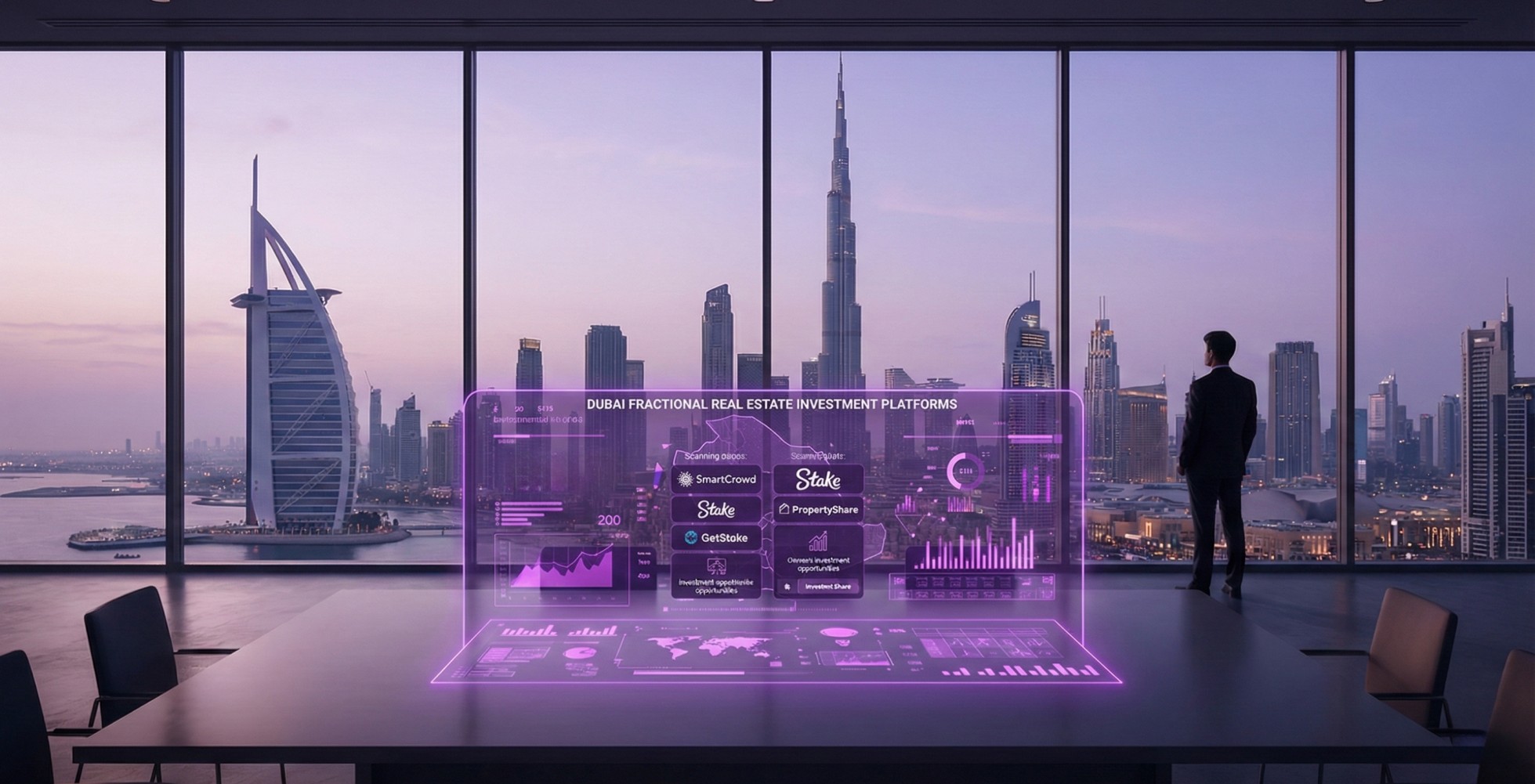
Learn how to compare fractional real estate platforms in Dubai using regulation, SPV structure, fees, liquidity rules, and net return modeling.


KEY takeaways
How to Evaluate Fractional Real Estate Investment Platforms in Dubai
Summary
Fractional platforms have opened Dubai’s property market to everyone—from first-timers funding AED 500 tickets to professionals building diversified, income-first portfolios. But not all platforms work the same way. Some are DFSA-regulated in DIFC, keep client money under strict client-assets rules, and use ring-fenced SPVs for each property. Others are lighter-touch, offer fewer protections, or mix in development and lending risk.
The platform you pick determines your risk, fees, liquidity, and governance. It decides how properties are screened, who holds the money, how income is paid, when you can exit—and what happens if things go wrong. In short: platform quality is the biggest hidden factor behind your returns.
30-second checklist (TL;DR)
- License: DFSA-regulated in DIFC for property/fund/crowdfunding activities? (Search the DFSA Public Register.)
- Client assets: Segregated client money + safe custody controls in place?
- Legal wrapper: DIFC/ADGM SPV per property, registered with DLD for title clarity?
- Minimums: Can you start small (e.g., AED 500) to diversify?
- Fees (all-in): Entry + annual + exit + “performance” fees (if any). Run the 5-year math.
- Liquidity: Exit windows or secondary market? Lock-ins?
- Transparency: Audited SPVs, monthly/quarterly statements, independent valuations.
- Scope: Completed, income-producing homes vs. riskier development deals.
- Tech & UX: Clean app, instant KYC, tax reports, distribution history.
- Conflicts/governance: Voting rights, related-party rules, complaint route.
Why This Matters: Empowering Comparison Shoppers in a Dynamic Market
Picking the right platform isn’t a cosmetic choice—it decides your returns, your risk, and your day-to-day experience owning real estate shares in Dubai.
Here’s why careful comparison pays:
- Safety first. Regulation under DIFC/DFSA means client money is segregated, audits are routine, and disclosures are standardized. Unregulated sites can look slick yet leave you exposed if something goes wrong.
- Fees compound—against you. A 1–2% difference in annual fees can erase thousands over a 3–5 year hold. Always model entry, annual, and exit costs, not just headline “projected yield.”
- Exit windows matter. Liquidity varies widely. Some fractional real estate investment platforms in the UAE offer fixed exit windows or secondary trading. Others require a vote or a buyer to appear. Your cashflow needs should match the platform’s exit design.
- What you own, exactly. Transparent SPV structures, clear title flow, and plain-English shareholder rights protect you. If you can’t see the property financials, tenant profile, and service-charge history, don’t guess—pass.
- Deal quality beats deal volume. Strong platforms say “no” more than they say “yes.” Look for documented due-diligence, conservative rent assumptions, and clear risk notes (vacancy, oversupply, capex).
- Minimums drive diversification. Lower minimum tickets let you spread across communities and strategies instead of concentrating risk in one asset. That’s portfolio power for everyday investors.
- Real operations, not marketing. Judge platforms by their property management partners, arrears control, service-charge governance, and distribution cadence—not by social proof alone.
- Data over hype. You want evidence: leases, rent rolls, valuation method, comps, and sensitivity tables that show returns if rents drop or service charges rise.
Understanding Fractional Ownership

Fractional real estate ownership lets several investors co-own a single property. Instead of buying the whole apartment or villa, you buy a share (a “fraction”). Your share gives you the same pro-rata rights you’d have as a full owner—rental income, capital gains when the asset is sold, and voting rights on key decisions (as defined by the platform).
Simple example:
If a property is worth AED 1,000,000 and you invest AED 10,000, you own 1%. You receive 1% of monthly rent and 1% of the profit at exit.
How the structure typically works (in plain English)
- Legal wrapper (SPV): Most platforms hold each property in a Special Purpose Vehicle. You own shares in the SPV, which in turn owns the title. This keeps accounting clean and ring-fences risk to that one asset.
- Your rights: Your platform dashboard shows your ownership %, payout history, and documents (valuation, leases, service-charge statements). You’ll usually vote on major actions such as selling the asset.
- Cash flow: Platforms collect rent, pay costs (service charges, insurance, minor maintenance), then distribute net income to investors—often monthly.
- Exit routes: Most models offer time-boxed holds (e.g., 3–5 years) with a sale vote, plus limited-window or secondary-market options to trade your real estate shares earlier (liquidity varies by platform).
Quick checklist before you click “invest”
- Ownership clarity: SPV jurisdiction, shareholder rights, voting rules, and liquidation priorities.
- Costs: All fees (entry, annual, exit), service charges, maintenance assumptions.
- Income realism: Current lease terms, vacancy assumptions, and who covers capex.
- Exit plan: Hold period, sale mechanics, and how any secondary market actually works (matchmaking vs. true order book).
- Regulatory posture: Where the platform is licensed/regulated and how client funds are safeguarded.
Key Advantages of Fractional Ownership in Dubai
Fractional ownership offers several compelling advantages, particularly within the context of Dubai's vibrant real estate market:
- Enhanced Accessibility: One of the most significant benefits is the ability to invest in prime Dubai properties with a fraction of the capital typically required for full ownership. This opens up opportunities for a wider range of investors, including those with smaller budgets, to access high-value assets in sought-after locations like Palm Jumeirah or Downtown Dubai .
- Portfolio Diversification: Investors can spread their capital across multiple properties rather than committing to a single asset. This diversification strategy helps mitigate risk and can potentially maximize returns by exposing the investor to various property types, locations, and market segments within Dubai.
- Increased Liquidity: Unlike traditional real estate, which is often illiquid, tokenized fractional shares can be traded more easily on digital platforms. This enhanced liquidity provides investors with greater flexibility to enter and exit investments, potentially allowing for quicker realization of gains. Some platforms are even exploring secondary markets to further facilitate investor exits.
- Passive Income Generation: Fractional owners can earn rental income proportional to their ownership stake without the operational burdens of traditional property management. Reputable platforms typically handle all aspects of property management, including tenant sourcing, maintenance, and rent collection, providing a truly hands-off investment experience.
- Transparency and Security: The use of blockchain technology ensures that ownership records are secure, transparent, and tamper-proof. Smart contracts automate rental and income distribution, further enhancing transparency and reducing the potential for disputes . This technological backbone builds trust and provides investors with peace of mind.
- Attracting Foreign Capital: The low entry points and digital tools associated with fractional ownership appeal to a global investor base, including younger demographics. This influx of foreign capital further stimulates the Dubai real estate market and supports developers in funding new projects.
Challenges and Risks to Consider

While fractional ownership presents numerous opportunities, investors must also be aware of potential challenges and risks:
- Regulatory Ambiguity: Although Dubai has made strides in establishing a tokenization framework, the regulatory landscape for fractional ownership is still evolving. Investors must conduct thorough due diligence to understand the specific legal implications of tokenized versus deed-based ownership models and ensure the platform complies with all local regulations .
- Liquidity Constraints: While generally more liquid than traditional real estate, the actual liquidity of fractional shares can vary depending on the platform and the specific property. The development of robust secondary trading mechanisms is crucial for ensuring easy exits for investors].
- Shared Ownership Governance: Managing a property with multiple owners requires clear governance structures. Contracts and Special Purpose Vehicles (SPVs) must precisely define use rights, income distribution, and decision-making processes to prevent conflicts among co-owners.
- Platform Risk: The success of a fractional investment heavily relies on the credibility and operational efficiency of the chosen platform. Risks include platform insolvency, mismanagement of properties, or inadequate technological infrastructure. Thorough vetting of the platform's track record, financial stability, and security measures is essential.
- Market Volatility: Like any real estate investment, fractional ownership is subject to market fluctuations. Economic downturns, changes in supply and demand, or geopolitical events can impact property values and rental yields in Dubai. Investors should understand the inherent market risks and consider their long-term investment horizon.
- Hidden Fees: While platforms disclose fees, investors must carefully scrutinize all associated costs, including acquisition fees, management fees, maintenance charges, and potential exit fees. These charges can significantly impact the overall return on investment.
Key Evaluation Criteria for Fractional Real Estate Investment Platforms in Dubai
Choosing between fractional real estate investment platforms in the UAE isn’t just about slick apps or catchy yields. Use the checklist below to compare apples to apples and pick a platform that fits how you want to own real estate shares in Dubai.
Core (works anywhere)
1) Minimum investment (access & diversification)

Lower minimums make it easier to spread small tickets across multiple assets and areas. That reduces concentration risk and smooths returns.
- What good looks like: ≤ AED 500 per deal.
- Watch for: High minimums that force you into one or two properties.
2) Returns shown the right way (net, not hype)

Past returns don’t guarantee the future, but they should be transparent and net of all fees.
- What good looks like: Property-level IRR/CoC, rent rolls, and realized exit cases; sensitivity tables (± rent, vacancy, service charges).
- Watch for: “Projected 10%+” without assumptions or cost breakdowns.
3) Fees (total cost of ownership)

Tiny differences compound. Compare entry, annual, exit, performance, KYC/payment fees. Model them over your intended hold (e.g., 3–5 years).
- What good looks like: A clear calculator that bakes in all costs.
- Watch for: Hidden “platform” or “processing” add-ons.
4) Investor eligibility & access
Some platforms admit anyone; others limit deals to accredited investors or certain geographies.
- What good looks like: Clear KYC/AML flow, availability for both local and international investors.
- Watch for: Vague terms or country blocks after sign-up.
5) Property management (hands-off in real life)

Your “passive” income is only as passive as the ops behind it.
- What good looks like: Named managers, SLAs for leasing/repairs, arrears control, service-charge governance, monthly reporting.
- Watch for: Generic “we handle it” claims, no track record.
6) Liquidity & exit path

How and when can you sell your stake? Exit windows, secondary markets, and vote-to-sell mechanics differ a lot.
- What good looks like: Predictable windows or an active secondary board; disclosed average time-to-sell.
- Watch for: One-way doors—no exits until maturity.
Dubai-specific (what matters in this market)
1) Regulation & licensing (DFSA/DIFC/DLD)

In Dubai, regulation is step one. DFSA-supervised, DIFC-based platforms offer stronger safeguards; compliance with DLD/RERA processes is non-negotiable.
- Why it matters: Segregated client funds, audits, clear disclosures, and recognized title/escrow mechanics.
- Ask for: License numbers and links to official registers.
2) Legal ownership structure (SPV & shareholder rights)

Most platforms use SPVs to ring-fence each asset. You want plain-English documents that explain your voting rights, distributions, liquidation order, and dispute handling.
- Ask for: SPV jurisdiction, articles, cap table limits, and how title flows from DLD to the SPV (and to you economically).
3) Local sourcing & due diligence depth

Dubai is a micro-market city. Strong platforms show neighborhood-level rent comps, service-charge histories (AED/ft²), vacancy trends, and developer/owners association checks.
- Ask for: RERA rent index references, DLD transaction comps, snag/inspection reports, and capex plans.
4) Sharia options (if relevant to you)

If you need Sharia compliance, confirm structures, screening, and scholar approvals at the platform and deal level.
- Ask for: Certificates and how rental/financing flows are screened.
5) Exit mechanics within the UAE framework

Exits commonly use biannual windows, investor votes, or secondary trading. Confirm timelines, fees, and required quorums—and how DLD transfer/escrow steps are handled at sale.
- Ask for: Historic average time-to-exit, any early-exit penalties, and who pays transfer/DLD fees on disposal.
Pro tips to separate signal from noise
- Model the hold, not the headline. Build a simple 5-year sheet with rent growth, 1–2 months vacancy/year, service-charge inflation, and all fees. See what’s left net.
- Prefer proof over projections. One realized exit with audited returns > five glossy decks.
- Check service charges early. In Dubai, high amenities often mean high charges; they can shave 2–4 percentage points off gross yield.
- Diversify by micro-market. Split small tickets across Marina/JLT (liquidity), JVC/Arjan (yield), and prime (defensive) to balance the portfolio.
- Ask “what if?”. If rents drop 10% or service charges rise 15%, does the deal still cash-flow? Good platforms show this upfront.
Bottom line
For comparison shoppers weighing fractional real estate investment platforms in the UAE, the winner is the platform that is: (1) regulated and DIFC-based, (2) transparent at the SPV and property level, (3) cost-disciplined with fees modeled in net returns, (4) built for liquidity with predictable exit routes, and (5) friendly to small minimums so you can diversify real estate shares in Dubai from day one.
If you’re building a short-list, prioritize a DFSA-supervised platform with AED 500 minimums, monthly reporting, and documented realized exits—then let the numbers (and the documents) decide.
Worked example: choosing between three similar deals
You have AED 15,000 to deploy and find three studio deals in prime rental areas with similar gross yields (6.5%). How to pick?
- Platform A (min AED 500): lets you split across 3 properties (AED 5k each). Fees: 1.5%/0.5%/2.5%.
- Platform B (min AED 2,000): higher entry threshold; also has 7% performance fee on appreciation.
- Platform C (min AED 500): similar fees to A, but clearer monthly reporting and SPV audits.
Choice: Diversify via A + C to hold 3–4 doors. You’d accept B if the asset case is clearly superior and you’re comfortable paying performance fees for upside. (Run the 5-year model first.)
Key Fractional Real Estate Investment Platforms in Dubai
Dubai's fractional real estate market is home to several prominent platforms, each offering unique propositions. Here's an overview of some leading players:
- Stake: A platform focusing on income-generating real estate deals in Dubai and Saudi Arabia, offering a rewards program and aiming for diversified portfolios.
- PRYPCO Blocks: Specializes in fractional ownership of Dubai's rental properties, promising guaranteed rental income upfront and regulated by the DFSA.
- Deed: Offers fractional ownership in Dubai real estate with a low minimum investment, regulated by the DFSA and licensed in DIFC, emphasizing legal share ownership via SPVs.
- SmartCrowd: Positioned as MENA’s first regulated crowdfunding platform for real estate investments, registered with DIFC and regulated by the DFSA, focusing on income-generating properties .
- Analah.ai: Provides access to curated global real estate and private equity opportunities, regulated by the DFSA, and highlights data-driven insights and a simplified investment process .
FAQ Section
Q1: What is fractional real estate investment in Dubai?
A1: Fractional real estate investment in Dubai allows multiple individuals to co-own a single property by purchasing shares or 'fractions' of it. This model makes high-value properties more accessible, as investors contribute a smaller capital outlay. Owners typically receive proportional rental income and benefit from property appreciation, with platforms managing the asset. It's a modern approach to real estate ownership in a dynamic market.
Q2: Is fractional ownership legal and regulated in Dubai?
A2: Yes, fractional ownership is legal in Dubai. The Dubai Land Department (DLD) has established a regulatory framework, particularly for tokenized real estate, allowing property rights to be represented as blockchain-backed shares. This ensures legal clarity and transferability. Investors should always verify that the platform they choose is registered and compliant with DLD regulations to ensure their investment is secure.
Q3: What are the typical entry points for fractional real estate investments in Dubai?
A3: Fractional investment platforms in Dubai offer significantly lower entry points compared to traditional property purchases. Some platforms allow investments starting from as little as AED 500-2,000 (approximately $136-$545 USD). This accessibility enables a wider range of investors, including those with limited capital, to participate in Dubai's lucrative real estate market and diversify their portfolios effectively.
Q4: How does fractional ownership compare to traditional real estate investment?
A4: Fractional ownership differs from traditional investment by offering lower entry barriers, enhanced liquidity through tradable shares, and passive income without direct property management responsibilities. Traditional investment requires full capital, involves complex transactions, and is less liquid. Fractional ownership is ideal for diversification and accessing prime properties with less capital, while traditional offers full control and potentially higher individual returns.
Q5: What are the risks associated with fractional real estate investment in Dubai?
A5: Risks include regulatory ambiguity, as the market is still evolving, and potential liquidity constraints if secondary markets are not robust. There's also platform risk, such as mismanagement or insolvency, and market volatility affecting property values. Investors should carefully assess the platform's compliance, fee structures, and governance models to mitigate these risks and ensure a secure investment.
Q6: How can I ensure the platform I choose is reputable?
A6: To ensure a reputable platform, verify its DLD registration and regulatory compliance. Research its track record, read investor reviews, and scrutinize fee structures for transparency. Evaluate the quality of properties offered and the clarity of their due diligence. Assess their technology, security measures, and customer support. A strong reputation, clear communication, and robust legal framework are key indicators of reliability.
Q7: What kind of returns can I expect from fractional real estate in Dubai?
A7: Returns from fractional real estate in Dubai typically come from rental yields and capital appreciation. Rental yields vary by property type and location, while capital appreciation is influenced by market trends. Dubai's real estate market has shown strong growth, with foreign-owned residential real estate increasing by 23% between 2020 and 2022. However, returns are not guaranteed and depend on market performance and platform efficiency.
DEED's Take: Navigating the Fractional Investment Landscape
The fractional real estate investment landscape in Dubai offers compelling opportunities for investors seeking to diversify their portfolios and access high-growth assets with lower capital outlay. While platforms like Stake, PRYPCO Blocks, Deed, SmartCrowd, and Analah.ai each present unique advantages, a discerning investor must prioritize regulatory compliance, transparent fee structures, and a clear understanding of the legal ownership framework.
The DFSA's active regulation of many of these platforms provides a layer of investor protection, which is a significant advantage in a rapidly evolving market. Ultimately, the best platform will align with an investor's specific financial goals, risk appetite, and desired level of involvement in property management.
Conclusion
Fractional real estate investment in Dubai presents a compelling opportunity for investors seeking to diversify their portfolios and access high-value properties with reduced capital outlay. By carefully evaluating platforms based on regulatory compliance, property quality, fee transparency, technological robustness, and clear exit strategies, investors can navigate this innovative market with confidence. The dynamic growth of Dubai's real estate sector, coupled with its progressive stance on PropTech and tokenization, positions it as a leading destination for modern real estate investment. As demonstrated by the significant foreign ownership and the rapid expansion of the tokenized market, fractional ownership is not merely a trend but a fundamental shift in how real estate assets are acquired and managed.
Ready to explore the potential of fractional real estate investment in Dubai? Begin your journey by researching DLD-regulated platforms and conducting thorough due diligence on their offerings. Empower yourself with knowledge and make informed decisions to unlock the opportunities within this exciting market. Your path to diversified wealth in Dubai's thriving real estate landscape starts now.
__________________________________________________
For promotional purposes only. Property and other details may vary. Capital at risk. Deed is regulated by the DFSA.
Senior Growth, Marketing & Brand Manager | Elevating Brand Equity & Fueling Sales Growth Across Fintech, Proptech.
Signup to our newsletter!
Stay ahead with exclusive updates, insights, and opportunities delivered straight to your inbox.
Frequently Asked Questions

Start earning passive income today
Join thousands of investors building wealth through fully-managed rental properties.