


How to Minimize Risks When Investing in Dubai Real Estate: Risk Management Guide

Learn how to minimize Dubai real estate investment risks using yield stress tests, supply tracking, regulated platforms, and smart exit strategies.


KEY takeaways
How to Minimize Risks When Investing in Dubai Real Estate: Risk Management Guide
Dubai's real estate market offers incredible opportunities, but smart investors know that big rewards come with big risks. The market has seen property prices rise 60% from 2022 to early 2025, creating both excitement and concern among investors. While these gains look attractive, Fitch Ratings warns that a 15% price correction could happen in the second half of 2025 through 2026. This reality makes risk management more important than ever for anyone looking to invest in Dubai property safely.
Risk-averse investors face a challenging decision. They want to benefit from Dubai's growth story but need to protect their capital from potential losses. The good news is that with proper planning and smart strategies, you can minimize risks while still participating in this dynamic market. This guide provides you with the knowledge and tools to make informed decisions that balance opportunity with security.
Why Risk Management Matters in Dubai Real Estate
Dubai is a fast-moving market. That speed creates opportunity—and risk. Prices and rents can rise quickly, but they can also cool when supply jumps or global conditions shift. In short: if you invest in Dubai property without a plan, you’re relying on luck, not strategy.
What makes Dubai different
- Global capital in, global shocks out. Flows of foreign buyers and tourists amplify both upturns and slowdowns. When global sentiment wobbles, demand and rental bookings can soften.
- Supply waves matter. A large delivery pipeline (well-publicized for 2025–2027) can pressure prices and yields if absorption lags. This is a structural risk you can and should model.
- Late-cycle signals are visible. Dubai hit record sales values recently, while rental growth has been decelerating—a classic sign of a maturing phase that calls for tighter underwriting.
Why a risk plan is non-negotiable
- Volatility is real. When international markets turn risk-off, Dubai often feels it through slower foreign investment and tourism demand—affecting both valuations and occupancy.
- Regulation is your seatbelt. Using DFSA-regulated, DIFC-licensed routes adds governance around client money, audits, and disclosures—crucial if a platform or counterparty stumbles. This is foundational for safer Dubai real estate investment.
- Costs compound. Fees, vacancy, and service charges can erode returns more than price moves in a steady year; risk control keeps more net yield in your pocket.
Understanding Dubai’s Major Investment Risks
1) Market volatility and price corrections

Dubai’s property cycle moves in waves. After a 60% price surge between 2022 and early 2025, several analysts flagged the next phase as a cooling/normalization, with corrections likely as new supply hits the market (Source M&M real estate).
Volatility doesn’t hit every asset the same way: luxury and newly launched districts tend to swing more than mid-market homes in established, transit-served areas. The practical takeaway for Dubai real estate investment is to match your asset choice to your risk tolerance—and plan for bumps even in an upcycle.
How to manage it
- Keep a multi-year horizon; don’t rely on forced selling timelines.
- Stress-test rent and exit price (e.g., –10% price, –5% rent) and ensure your deal still clears your target yield.
- Favor assets with broad tenant pools (1BR/2BR in connected locations) to cushion vacancies.
2) Oversupply risk (by sub-market and segment)
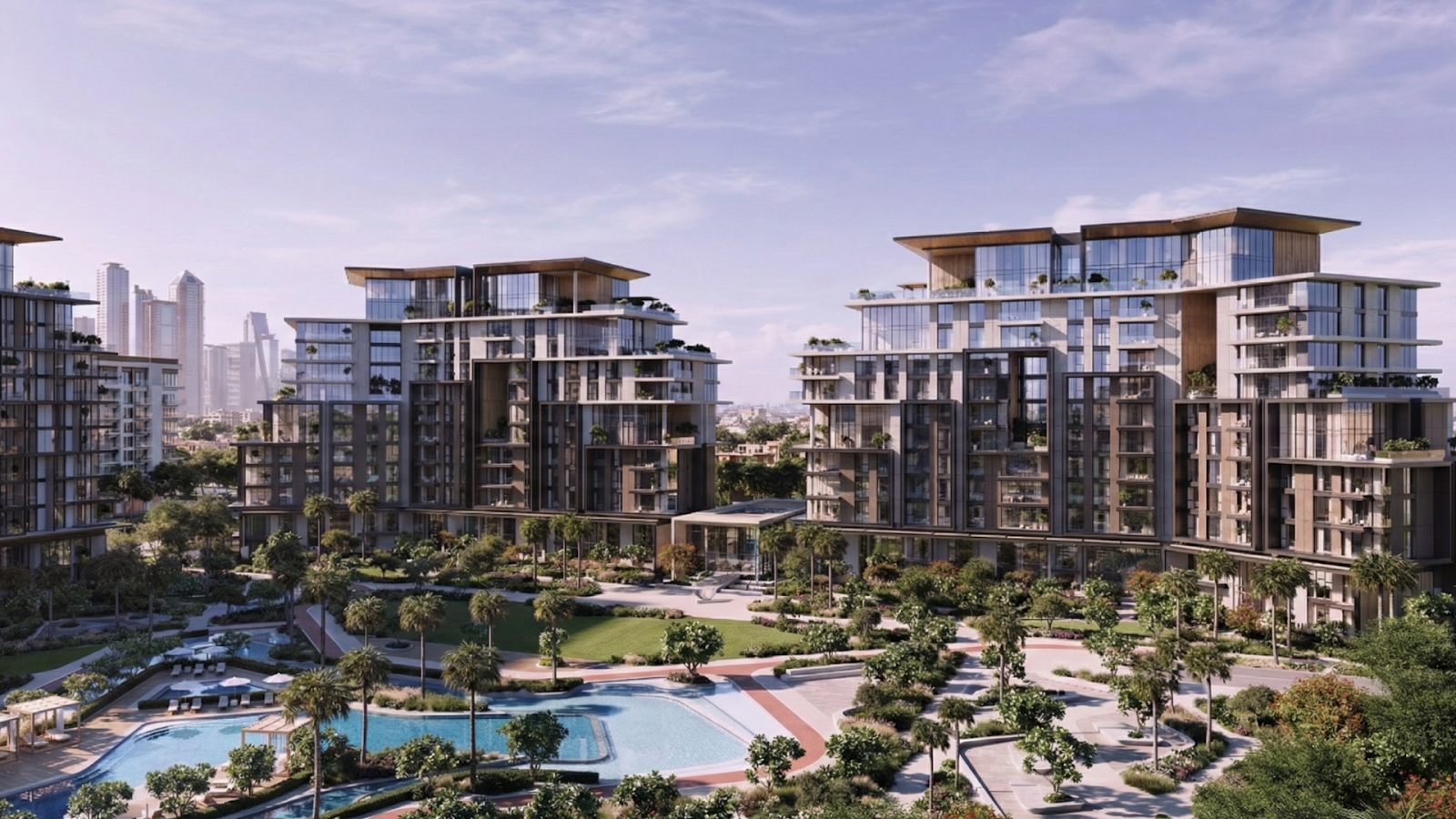
Dubai’s strength—fast delivery—can also create local oversupply, pressuring rents and prices when deliveries outpace absorption. Current pipelines for 2025–2027 are widely discussed and material enough to move sub-market economics, so area selection is critical if you plan to invest in Dubai property for income. (Source Fitch)
How to manage it
- Track pipeline vs. absorption in your exact micro-market (not just citywide headlines).
- Prefer locations with durable demand drivers (metro access, business hubs, schools, waterfronts).
- Aim for buildings with proven occupancy and realistic service charges to protect net yield.
3) Off-plan development risk
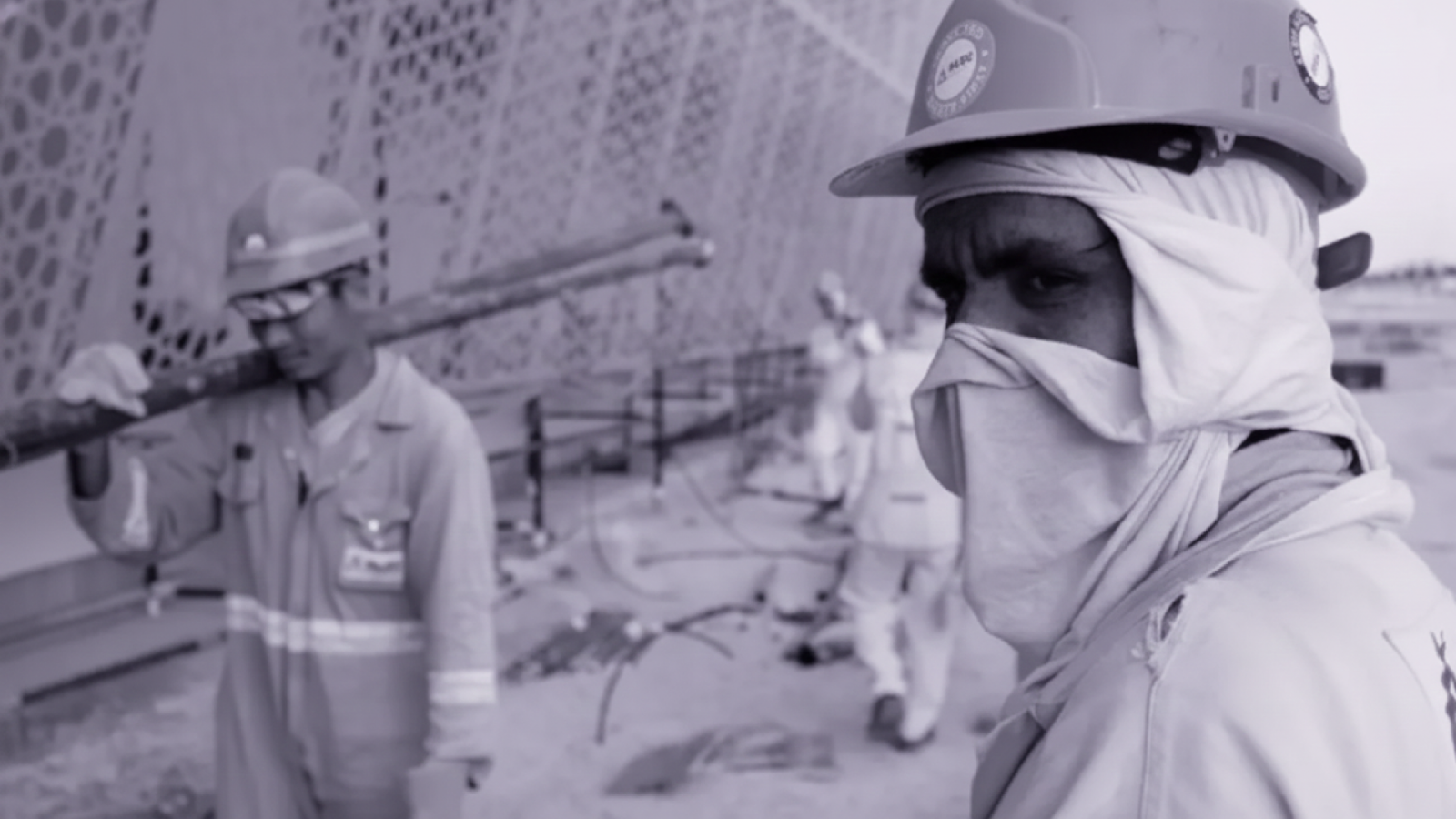
Buying under construction adds construction and delivery risk (delays, scope changes). In past downturns—most famously the 2009 crash—project timelines slipped and some schemes were canceled, which hurt investors relying on early exits.
In today’s late-cycle feel, more risk-averse buyers are tilting toward ready units for immediate cash flow and visible asset quality.
How to manage it
- If you choose off-plan, prioritize top-tier developers, RERA-escrowed projects, and milestone-based payment schedules; price in extra time to handover.
- Compare the “discount” to ready units after adding likely handover slippage and interim financing costs.
- For conservative income investors, lean to completed stock with tenant demand you can verify.
4) Legal and regulatory change

Dubai’s real estate rules keep evolving as the market matures (DLD/RERA procedures, ownership/transaction rules). At the platform layer, DFSA/DIFC oversight adds guardrails—segregated client money, audits, capital rules—but terms, fees, and exit mechanics still vary, so you must read the fine print.
How to manage it
- Stay current on DLD/RERA updates and use DFSA-regulated, DIFC-licensed routes when investing via platforms for stronger investor protection.
- Document everything (service charges, exit rules, voting rights) and have local counsel review complex deals.
- Build compliance buffers into your timeline (Ejari, handover, NOC, transfer booking) to avoid avoidable delays.
Bottom line: Dubai’s market rewards discipline. Cycles, supply waves, build risk, and evolving rules are manageable—if you price them in. Favor resilient locations, verified tenant demand, and regulated channels; stress-test your numbers; and keep cash buffers so short-term swings don’t force long-term mistakes.
Key Market Drivers
Several factors contribute to Dubai's real estate dynamism:
- Population Growth: Dubai's population exceeded 3.8 million in 2024, a 5% year-on-year increase, driving demand for residential units.
- Tourism Influx: Tourist arrivals increased by 9% in overnight visitors compared to 2023, reaching 18.7 million, boosting demand for hospitality and short-term rental properties.
- Economic Growth: The city's GDP grew by 3.2%, reaching AED 231 billion, with strong performance in sectors like transport and storage (13.6% expansion).
- Investor-Friendly Policies: The UAE's commitment to innovation, sustainability, and economic diversification, coupled with favorable tax regimes, attracts global capital.
While the market presents lucrative opportunities, understanding its inherent risks is crucial for sustainable investment. The next sections will delve into these risks and strategies for their effective management.
Hidden Costs That Impact Returns
1) Service charges, maintenance, and “silent drags”
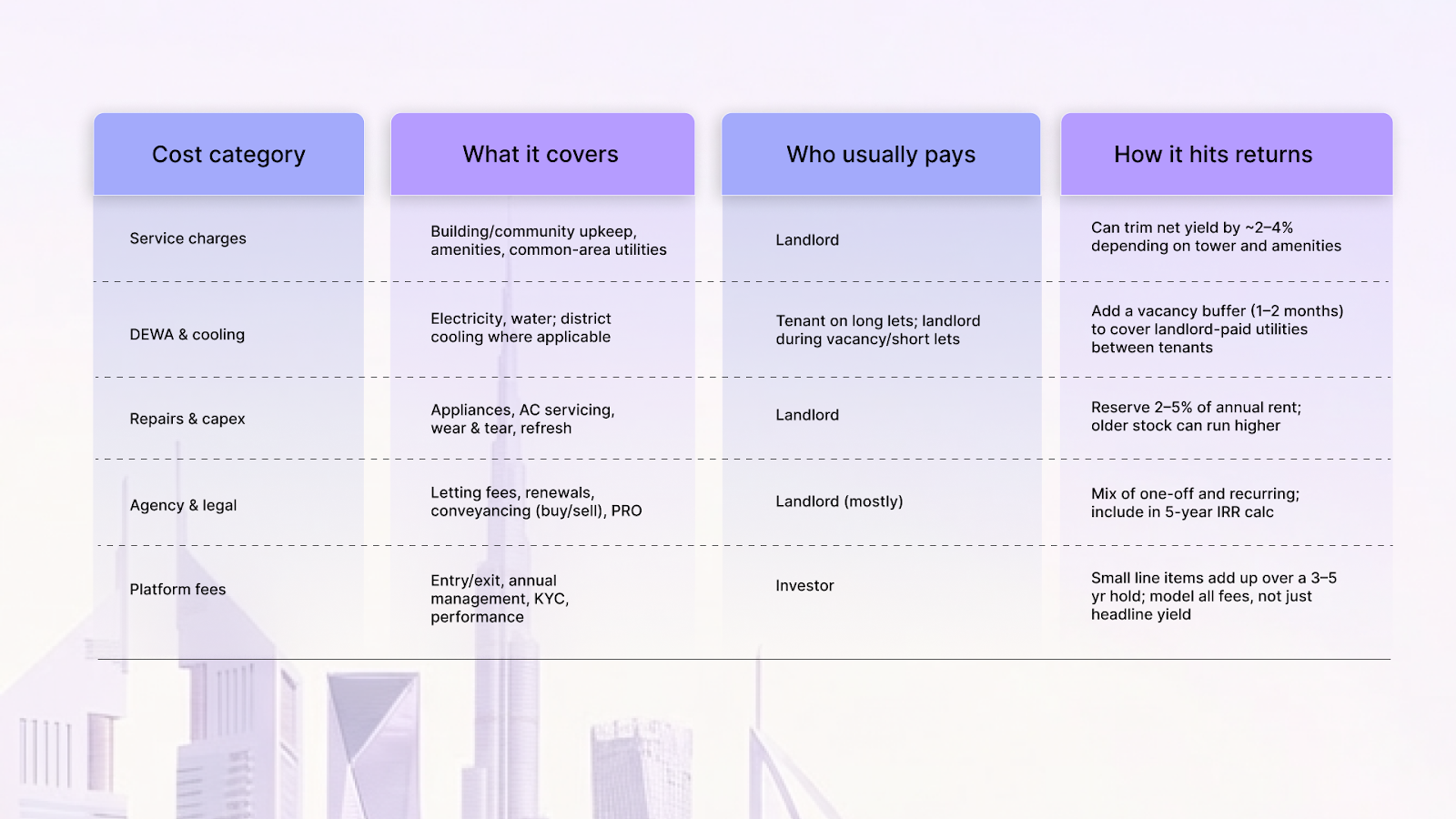
The line between gross and net yield is where many deals go wrong. Budget these items before you commit:
How to sanity-check a listing
- Ask for the current service-charge rate (AED/sq ft/year) and last two years’ invoices; plug into your net yield.
- Confirm who pays cooling and the typical void period in that building.
- Set a repairs reserve (start at 2–5% of rent) and increase for older towers.
- Map the full platform fee stack (entry, annual, exit, KYC, any performance fee) over your intended hold; small percentages compound over time.
Quick rule: If a gross 7.5% deal nets to ≤5.5% after service charges, fees, and realistic vacancy, it’s not “cheap”—it’s accurately priced. Pick a better building or a lower all-in cost route.
2) Currency and macro risks (especially for overseas investors)

The UAE dirham is pegged to the US dollar, so your returns swing with your home-currency vs USD/AED—not just with rents and prices. A weaker home currency boosts your AED returns when converted back; a stronger one reduces them. Pair that with Dubai’s sensitivity to global risk cycles (tourism, trade flows, international capital), and your headline yield can feel very different in your base currency during a downturn.
Practical hedges
- Stagger FX conversions in/out (don’t convert everything at once).
- Keep an AED cash buffer for expenses, so you’re not forced to convert at bad rates.
- Diversify income streams (multiple units/areas) to reduce reliance on one rent or one tenant segment.
3) The platform “friction” you don’t see at first glance

Two deals with the same gross yield can finish miles apart after fees, exits, and cash-flow timing. Compare platforms on all charges (entry, annual, exit, KYC, and any performance fee on appreciation), lock-ins, and actual exit mechanics. A 1.5% entry + 0.5% annual + 2.5% exit can remove a meaningful chunk of your five-year IRR—before any performance fee. Always model net, not marketing APR.
Hidden-cost checklist
- Current service-charge rate and last 2 years’ statements
- Cooling/DEWA: who pays during lease and vacancy
- Void assumption: 1–2 months per year unless proven otherwise
- Repairs reserve: 2–5% of rent (higher for older stock)
- All platform fees over intended hold (entry, annual, exit, KYC, performance)
- FX plan if investing from abroad (staggered conversions, AED buffer)
Bottom line: The best risk control is boring math. Price in the quiet costs, compare platforms on net outcomes, and your Dubai real estate investment will behave closer to plan—whatever the market throws at you.
Strategies for Effective Risk Mitigation
Minimizing risk in Dubai real estate investment isn’t about avoiding the market—it’s about stacking small, smart advantages. Use the playbook below to protect capital, smooth cash flows, and still capture upside when you invest in Dubai property.
1) Due diligence that goes beyond the brochure

- Verify the asset, not the ad. Pull the Title Deed, check unit size vs. floor plan, confirm parking and storage, and request the last 2 years of service-charge statements.
- Check the landlord math. Underwrite net yield (rent minus service charges, vacancy, basic maintenance, platform fees) and stress-test with –5% rent and +1–2 months void.
- Validate the operator. If you’re investing via a platform, confirm regulatory status (DFSA/DIFC where applicable), client-money segregation, audits, and exit mechanics—don’t rely on marketing FAQs.
- Use multiple sources. Cross-reference property claims (yields, occupancy, “area comps”) with independent market reports and official releases before you sign.
One-minute checklist : Title Deed • last 2 yrs service charges • tenancy history (rent, arrears, notice) • snag/inspection report • platform license proof (if fractional) • exit rules in writing.
2) Stay onside of the rules (they’re your seatbelts)

- Use regulated pipes. DFSA-regulated, DIFC-licensed platforms add guardrails (segregated client funds, audits, capital requirements). That doesn’t remove asset risk, but it reduces platform/process risk.
- Track DLD/RERA changes. Procedures and forms evolve (NOC, transfer bookings, Ejari). Build admin time into your timeline so paperwork doesn’t derail cash flows.
- Document everything. Keep copies of approvals, payment receipts, management agreements, and fee schedules. Small documentation gaps become big disputes later.
3) Finance smart (so one bump doesn’t force a sale)

- Model all-in costs. Include DLD fee (4%), broker/legal, service charges, utilities during vacancy, and platform fees (entry/annual/exit, plus any KYC or performance charges if applicable).
- Liquidity buffer. Hold 6–12 months of property OPEX (service charges + typical repairs + mortgage top-up if leveraged).
- Right-size leverage. If using a loan, test DSCR with lower rent and higher rates; avoid terms that require you to sell in a soft patch.
4) Manage the asset like a business

- Tenant quality > speed. Verify employment, references, and affordability; choose slightly lower rent for a stronger covenant and longer stay.
- Preventive maintenance. Annual AC servicing and timely repairs save capex and keep good tenants.
- PropTech helps. Use simple dashboards (or a professional manager) for rent tracking, reminders, and service requests.
- Data in, insight out. Track renewal rates, average days-vacant, and actual net yield by property—then reprice or upgrade where the numbers lag.
5) Have an exit plan on day one

- Liquidity reality-check. Ask: How will I exit—private resale, tenant-to-owner, or platform exit window/secondary market (if fractional)? Get the rules in writing.
- Price to the next buyer. Focus on “middle-market” units (e.g., 1–2BR near metro/business nodes) with broad buyer pools—these resell fastest in all cycles.
- Stage exits. If you own several units, ladder disposals across quarters rather than trying to top-tick the market.
Professional Risk Assessment Framework
A) Property selection criteria (reduce risk at the source)
- Location resilience. Favor micro-markets with multiple demand drivers (metro access, business hubs, schools, retail). These areas cushion rents during slowdowns.
- Asset profile. Prefer layouts with durable demand (1BR/2BR) over idiosyncratic units. Avoid buildings with notorious service-charge spikes.
- Developer & building quality. Track record matters: reputable developer, good facilities management, clean snag reports, stable owners’ association.
B) Due diligence process (make it systematic)
- Legal verification. Confirm clear title, correct owner, absence of liens; verify NOC process and any pending service-charge disputes.
- Financial verification. Build a net yield model (rent, service charges, voids, routine repairs, platform fees), then stress test.
- Market verification. Use transaction and rental comps from official/independent datasets; note supply in the pipeline for the specific district.
C) Financial analysis (conservative inputs win)
- Underwrite net, not gross. A 7.5% gross that nets ≤5.5% after costs is a different investment—price or walk accordingly.
- Scenario ranges. Model Base / Down-1 (–5% rent, +1 month void) / Down-2 (–10% rent, +2 months void, +10% service charges).
- IRR after fees. Map the full platform fee stack over your hold period (entry + annual + exit + any performance fee) to avoid “yield illusion.”
Proven Risk Mitigation Strategies
1) Diversify on three axes

- By location. Blend established hubs (e.g., Marina/Business Bay) with rising sub-markets tied to new infrastructure. This balances stability with growth.
- By property type. Mix 1–2BR apartments (yield) with select townhouses or mid-tier villas (diversification/capital growth).
- By time. Stagger purchases over several quarters (dollar-cost averaging) to smooth entry risk across the cycle.
2) Manage supply risk proactively

- Track pipeline vs. absorption for your exact district; over-delivered areas deserve harsher underwriting on rent and exit price.
- Prefer demand magnets. Buildings near metro, Grade-A employment nodes, or schools stay leased even in softer markets.
3) Be selective with off-plan (or avoid it)

- If you do it: Only with RERA-escrowed, milestone-funded projects from top-tier developers—and price in handover slippage.
- If you want income: Stick to completed stock where you can see the unit, validate rent, and start cash flow immediately.
4) Use regulated platforms for fractional routes

- Why it helps: DFSA/DIFC oversight introduces client-money segregation, audits, and capital rules—valuable if a platform falters.
- What to compare: Minimum ticket, fee stack (entry/annual/exit, KYC, any performance fee), holding period, exit windows/secondary market. Don’t choose on headline yield alone.
Strategic Property Management (for income-focused investors)
- Retention over churn. A 3% rent cut is often cheaper than 6 weeks of vacancy plus re-letting costs.
- Service-charge diplomacy. Attend OA meetings (or have your manager do it); push for realistic budgets and preventive maintenance to keep charges predictable.
- Capex planning. Set a rolling capex reserve (AC, appliances, repaint) so surprises don’t force a sale at the wrong time.
Exit Strategy Planning (before you buy)
- Define your trigger. Price level, IRR target, or market signals (e.g., rent growth turns negative for two consecutive quarters).
- Match the channel. Private resale vs. platform exit window; factor timelines and fees into your IRR. Get the process and cut-off dates in writing.
- Laddered exits. If holding multiple units, plan staggered disposals to reduce timing risk in volatile quarters.
Professional support that pays for itself
- Licensed agent & manager. Use RERA-registered professionals and established property managers; good ops lift net yield and protect asset value.
- Legal & tax counsel. Local counsel catches issues you won’t; review contracts, fee schedules, and any unusual clauses.
- Market monitoring. Subscribe to regular market snapshots (rents, absorption, new supply) for your micro-markets and adjust pricing/strategy early.
The takeaway
You can’t eliminate risk—but you can structure it. Combine regulated channels (DFSA/DIFC for fractional platforms), conservative net-yield math, micro-market awareness (pipeline vs. absorption), and a pre-planned exit. Do that consistently, and your Dubai real estate investment becomes a repeatable process rather than a roll of the dice.
FAQ Section
Q1: What are the primary risks associated with investing in Dubai real estate?
A1: Key risks include market volatility, potential oversupply in certain segments, regulatory changes, and financial risks like currency fluctuations and interest rate shifts. Operational risks, such as property management challenges and tenant-related issues, also need careful consideration. Understanding these diverse risks is crucial for developing effective mitigation strategies and ensuring a secure investment.
Q2: How can I mitigate the risk of market volatility in Dubai?
A2: Mitigating market volatility involves thorough due diligence, staying updated on market trends, and diversifying your portfolio across different property types and locations. Focusing on established communities with strong infrastructure and consistent demand can also help. Long-term investment horizons often help ride out short-term market fluctuations.
Q3: What is the importance of RERA and DLD for investors?
A3: The Real Estate Regulatory Agency (RERA) and Dubai Land Department (DLD) are vital for investor protection. RERA regulates the real estate sector, ensuring fair practices, while DLD oversees transactions and property registration. Engaging with RERA-registered agents and understanding DLD regulations helps prevent fraud, ensures transparency, and provides legal recourse in disputes.
Q4: Are off-plan properties riskier than ready properties in Dubai?
A4: Off-plan properties can offer lower prices and flexible payment plans but carry higher risks, primarily related to project completion delays or cancellations. Ready properties provide immediate rental income and less uncertainty but typically come with higher upfront costs. Your risk tolerance and investment goals should guide your choice.
Q5: How do currency fluctuations affect my investment in Dubai?
A5: The UAE Dirham (AED) is pegged to the US Dollar. If your home currency weakens against the USD, your investment in Dubai becomes more expensive. Conversely, a stronger home currency makes Dubai properties more affordable. Monitoring global currency trends is important, especially for international investors, as it impacts purchasing power and potential returns.
Q6: What role does property management play in risk minimization?
A6: Effective property management is crucial for minimizing operational risks. This includes maintaining high property standards, ensuring tenant satisfaction, and efficient rent collection. Utilizing PropTech solutions can streamline operations, while prioritizing sustainability and robust cybersecurity measures further safeguards your investment and enhances its long-term value.
Q7: Why is an exit strategy important before investing?
A7: An exit strategy is vital because it outlines how you plan to divest your property, whether through resale or long-term rental. It helps you understand market liquidity and potential returns, ensuring you can exit your investment without significant financial loss if market conditions change or personal circumstances require it. It provides a safety net and clear direction.
DEED's Take
At Deed, we understand that risk management is the foundation of successful real estate investment, especially for investors who prioritize capital preservation alongside growth. Our approach to Dubai real estate investment reflects this understanding through every aspect of our platform design and property selection process.
We believe that the best risk management starts with transparency and education. That's why we provide comprehensive information about each property, including detailed financial projections, area analysis, and risk assessments that help you make informed decisions. Our DFSA regulation and DIFC licensing provide institutional-grade oversight that protects your investments.
Our focus on completed residential properties eliminates the construction and development risks that concern many investors. By investing only in ready properties with established rental histories, we provide immediate income potential while reducing the uncertainties associated with off-plan developments.
How DEED Minimizes Investment Risks
Our property selection process emphasizes established areas with proven rental demand and strong infrastructure. We avoid speculative developments and emerging areas that carry higher risks, focusing instead on locations with diverse economic bases and stable tenant populations.
Professional property management through established partners ensures consistent rental income while maintaining property values. Our management teams handle all operational aspects, from tenant relations to maintenance coordination, reducing the burden on investors while maximizing returns.
With investment minimums starting at just AED 500, our platform enables effective diversification across multiple properties and areas. This accessibility allows investors to spread risks while building substantial portfolios over time, regardless of their initial capital availability.
Conclusion: Building Wealth While Managing Risk
Successful Dubai real estate investment requires balancing opportunity with prudent risk management. While the market offers exceptional growth potential, protecting your capital should always be the first priority when you invest in Dubai property. The strategies outlined in this guide provide a framework for making informed decisions that minimize risks while participating in one of the world's most dynamic property markets.
The key to long-term success lies in understanding that risk management is not about avoiding all risks, but about taking calculated risks that align with your financial goals and risk tolerance. By focusing on established areas, completed properties, and professional management, you can build a resilient portfolio that generates steady income while appreciating over time.
Remember that Dubai's real estate market rewards patient, well-informed investors who take a systematic approach to risk management. The current market conditions, with Fitch's prediction of a moderate correction, actually present opportunities for risk-averse investors to enter at more favorable prices while implementing the protective strategies discussed in this guide.
Start your Dubai real estate journey by applying these risk management principles to your investment planning. Whether you're making your first property investment or expanding an existing portfolio, the combination of careful selection, professional support, and systematic risk management will help you achieve your financial objectives while protecting your capital in this exciting market.
__________________________________________________
For promotional purposes only. Property and other details may vary. Capital at risk. Deed is regulated by the DFSA.
Senior Growth, Marketing & Brand Manager | Elevating Brand Equity & Fueling Sales Growth Across Fintech, Proptech.
Signup to our newsletter!
Stay ahead with exclusive updates, insights, and opportunities delivered straight to your inbox.
Frequently Asked Questions

Start earning passive income today
Join thousands of investors building wealth through fully-managed rental properties.