


How to Generate Passive Income from Dubai Real Estate: 7 Proven Methods

Discover 7 proven ways to earn passive income from Dubai real estate—rentals, REITs, fractional ownership, and yield strategies to maximize net returns.


KEY takeaways
How to Generate Passive Income from Dubai Real Estate: 7 Proven Methods
Dubai, a city known for its luxury and growth, offers great chances for investors. If you want to earn steady money without much effort, Dubai's real estate market is perfect for passive income investment Dubai.
This guide is for investors who want to make money from their property. We will show you seven ways to earn income and how to make the most of your investments in Dubai.
Why This Matters: The Appeal of Passive Income for Yield-Focused Investors
Passive income means earning money without working daily. For investors who want regular earnings, this is very attractive. Dubai makes this even better with its unique advantages:
- No Income Tax: In Dubai, you don't pay income tax. This means you keep more of your rental earnings and profits, which increases your overall income. This is a big reason why international investors choose Dubai.
- High Rental Returns: Dubai often has higher rental returns compared to many other big cities. This directly leads to more passive income Dubai real estate.
- Strong Economy: Dubai's economy is always growing. Many people and businesses move here, which keeps the real estate market healthy. This means there are always tenants and buyers.
- Good Location: Dubai is a key city between the East and West. This makes it important for trade, tourism, and money, which also increases demand for its properties.
- Investor-Friendly Rules: The Dubai Land Department (DLD) and other groups have made clear rules that help investors. This makes property ownership and investment safe and predictable.
All these points make Dubai a great place for passive income investment Dubai. It's ideal for those who want to build a strong and profitable property portfolio.
The 7 Proven Methods
Below you’ll find each income strategy with: What it is, How you get paid, Start-up checklist, Ongoing effort, Who it’s for, and Risks to watch.
1) Long-Term Buy-to-Let (Ready Apartments)

What it is: Buy a completed apartment in a popular rental area, sign a 12-month lease, receive rent monthly or quarterly.
How you get paid: Net rental yield (rent minus all costs) + long-term capital growth.
Typical effort: Low-to-medium (higher at purchase; lower after you hire management).
Who it’s for: Income-first investors who prefer stability over high volatility.
Start-up checklist
- Pick renter-dense communities near work hubs/metro.
- Confirm service charges and realistic market rent (use a yield calculator).
- Budget closing costs: DLD fee (4%), agency, conveyance, and initial furnishings.
- Hire licensed property management.
Risks to watch
- Service charges creep can erode yield.
- Area-specific oversupply can push rents down.
- Vacancy between tenants—budget 1–2 months per year in conservative models.
2) Short-Term/Holiday Homes (Airbnb-Style)

What it is: Furnish a property and rent it out nightly/weekly under Dubai’s holiday-home rules.
How you get paid: Higher gross rent vs. long-lets in peak seasons; payouts monthly.
Typical effort: Medium (outsourced if you use a holiday-home operator).
Who it’s for: Yield seekers who accept seasonality and management fees.
Start-up checklist
- Choose tourist/business areas (Marina, Downtown, JBR, Palm).
- Get holiday-home permit; factor furnishing and setup.
- Use dynamic pricing tools; partner with a licensed operator.
Risks to watch
- Seasonality and event-driven demand.
- More wear-and-tear; higher OPEX; operator fees.
- Regulatory compliance (permits, building rules).
3) Fractional Real Estate (Real-Estate Shares in Dubai)

What it is: Buy shares in a specific, income-producing property via a regulated platform; get your pro-rata share of rent and appreciation at exit.
How you get paid: Monthly/quarterly rent distributions + share of sale profits.
Typical effort: Low—platform handles acquisition, tenants, and reporting.
Who it’s for: Newer investors, global investors, and busy professionals.
Why this stands out now
- Low minimums (from AED 500) let you diversify across multiple units/areas from day one.
- Licensed platforms disclose fees and provide structured exits (e.g., bi-annual windows/hold periods).
Start-up checklist
- Verify DFSA/DIFC regulation and client-fund segregation.
- Read fee schedule (entry, admin, exit; any performance fee).
- Compare platform track records and property curation quality.
Risks to watch
- Liquidity depends on exit windows/secondary markets.
- Platform risk (mitigate by choosing regulated operators).
4) REITs Listed in the UAE
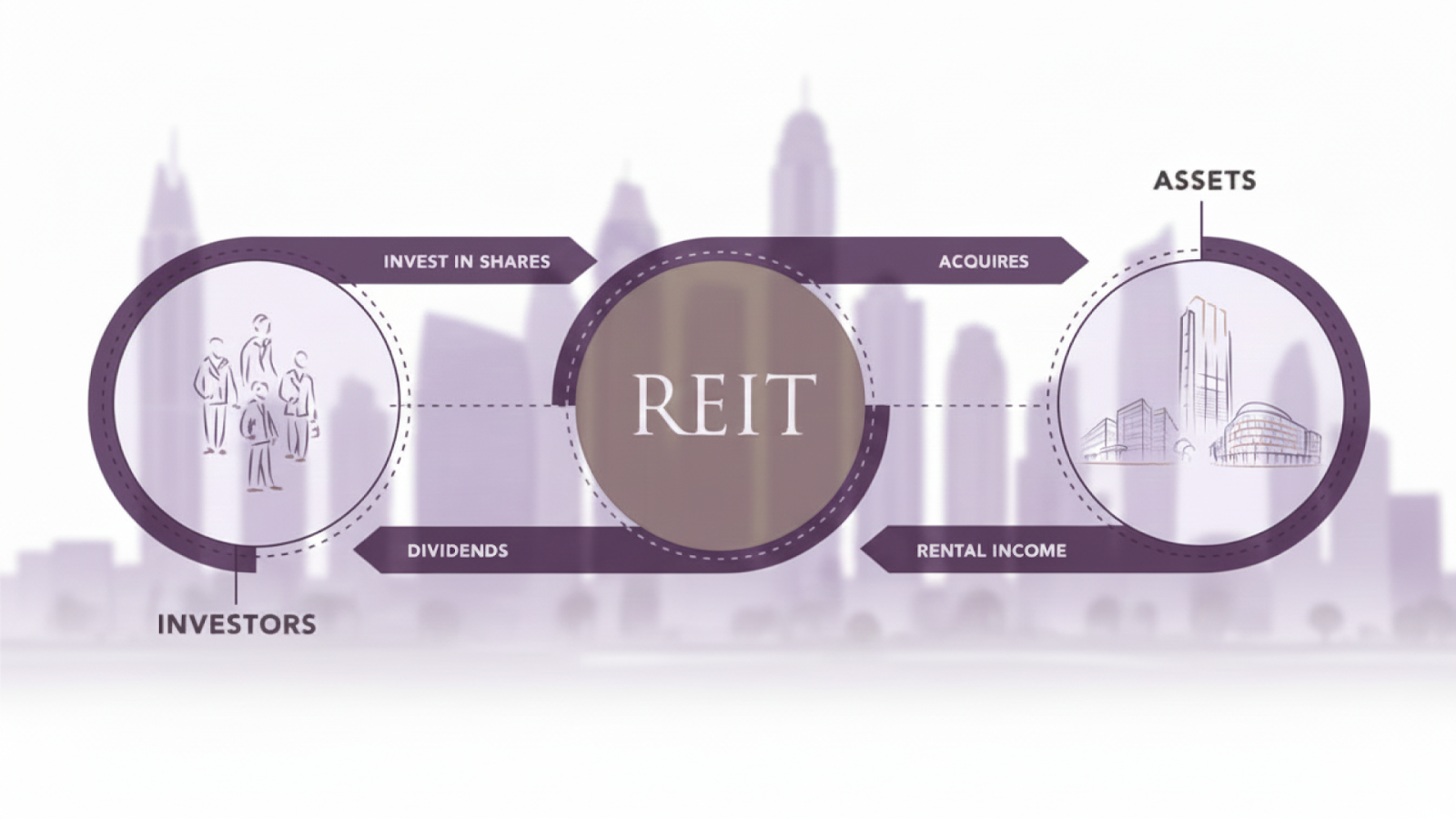
What it is: Buy units of a Real Estate Investment Trust on the exchange; receive dividend income sourced from a portfolio of income-producing assets.
How you get paid: Cash dividends (often semi-annual) + unit price movements.
Typical effort: Very low; easy to buy/sell via broker.
Who it’s for: Investors who want instant diversification and liquidity.
Start-up checklist
- Open brokerage account; review REIT fact sheets (occupancy, WALE, debt, sector mix).
- Compare dividend track records and expense ratios.
Risks to watch
- Interest-rate sensitivity affects REIT pricing.
- Management quality and leverage can amplify downside.
5) Real-Estate–Backed Notes (Crowdlending/Debt)

What it is: Lend to property projects or income assets for a fixed coupon; capital is repaid at maturity (subject to performance).
How you get paid: Fixed interest (monthly/quarterly), not rent; no ownership.
Typical effort: Low; platform evaluates deals; you select notes.
Who it’s for: Income-first investors who want predictable cashflows and shorter terms.
Start-up checklist
- Confirm platform regulation and collateral quality/LTV.
- Read intercreditor terms and default processes.
- Ladder maturities to smooth cashflow.
Risks to watch
- Default risk if borrower underperforms.
- Refinance risk at maturity in tight credit cycles.
6) Commercial Strata (Shops, Small Offices, Warehousing)

What it is: Buy a strata commercial unit; lease to a business on 3–5-year terms.
How you get paid: Longer leases with step-ups; net of service charges and fit-out.
Typical effort: Medium (leasing cycles are slower; due diligence heavier).
Who it’s for: Investors comfortable with tenant concentration risk seeking sticky income.
Start-up checklist
- Validate footfall/road access, anchor tenants, parking.
- Check fit-out responsibilities and tenant incentives.
- Stress-test vacancy at renewal.
Risks to watch
- Longer downtime if tenant exits.
- Economic sensitivity by sector (retail vs logistics).
7) “Handover-Ready” Off-Plan to Let

What it is: Buy a near-completion unit with staggered payment; begin renting right after handover.
How you get paid: Rent from the day you take possession; potential discount on purchase price vs ready stock.
Typical effort: Medium; monitor construction milestones and handover readiness.
Who it’s for: Investors seeking value entry but unwilling to take early construction risk.
Start-up checklist
- Focus on reputable developers and escrowed projects.
- Verify snagging, service-charge bands, and realistic rent.
- Keep buffer for post-handover furnishing.
Risks to watch
- Delay risk shifting your first-rent date.
- Initial defects and short teething periods.
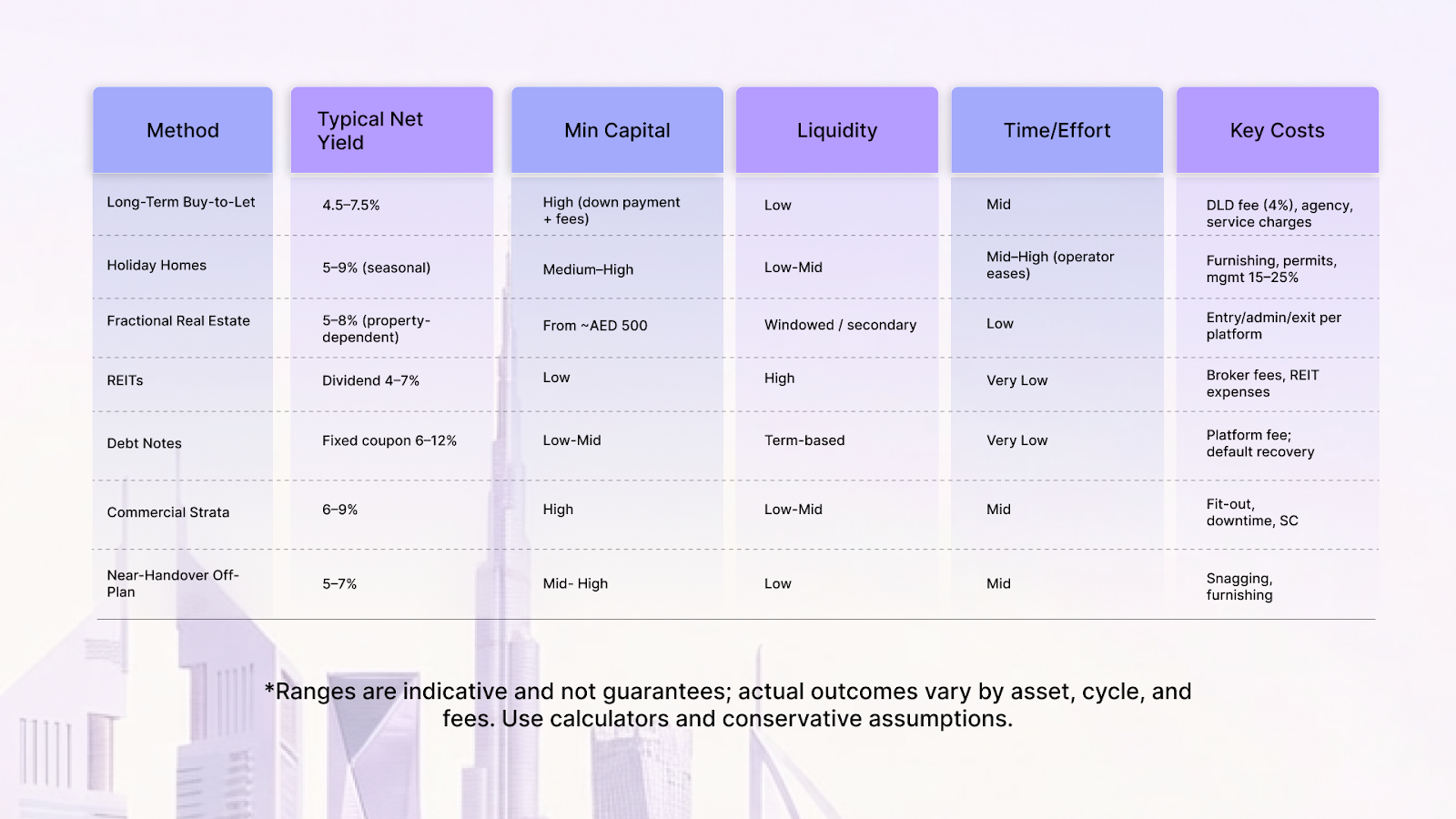
Quick Comparison: Income Methods at a Glance
Income Optimization Strategies for Maximizing Passive Returns
To get the most out of your passive income Dubai real estate, mix smart selection with tight operations and simple, repeatable routines. Use the playbook below to raise rents, cut leaks, and keep occupancy high.
1) Pick the right property (and the right micro-market)

- Go where tenants go. Communities with daily demand win: Dubai Marina, Downtown, Business Bay, JVC, Palm Jumeirah. Check current rents by unit type before you buy.
- Choose the yield-friendly format. Studios and compact 1BRs often deliver higher % yields than large units in the same tower.
- Ready vs. off-plan. Ready units = rent from day one and lower delivery risk. Off-plan can add upside but needs timing skill and extra buffers.
- Cross-check platform data. Reputable fractional platforms share rent comps, service charges, and hold periods—use them to sanity-check your own model.
2) Price dynamically (not once a year)

- Benchmark quarterly. Track asking and achieved rents for “like-for-like” units in your tower and the two nearest buildings. Adjust your price—not just at renewal.
- Seasonality matters. Tourism peaks, school cycles, and corporate moves shift demand. Use 12-month occupancy and lead-time data to tweak rates monthly.
- Signal value, not discount. Offer one free week, flexible start dates, or utility caps instead of raw rent cuts.
- Watch the cycle. When citywide rent growth slows, prioritize occupancy over headline rate to protect cash flow. Recent deceleration in rental growth is a cue to stay flexible.
3) Run professional property management

- Hire pros (or be one). A solid manager handles leasing, KYC, inspections, service-charge disputes, and arrears. This converts “landlording” into true passive income.
- Set SLAs you can audit. Examples: 24-hour response time, 72-hour repair close, quarterly preventive maintenance, move-in checklist with timestamped photos.
- Tenant retention > tenant acquisition. Fast fixes, clear comms, and fair renewals cost less than relisting. Offer renewal perks (paint refresh, minor upgrades) that add perceived value.
4) Add rent-lifting value (low cost, high impact)

- Furnish for your target. Executive-ready 1BRs (neutral palette, durable furniture, hotel-grade linens) can lift rents 8–15% vs. unfurnished in business corridors.
- Bundle convenience. Internet, DEWA caps, or cleaning subscriptions justify slightly higher rent and reduce friction.
- Differentiate the unit. Smart locks, blackout curtains, and quiet appliances are small upgrades that earn premium placement and faster leasing.
5) Use tech to squeeze more NOI

- Pricing tools. Track competitor listings, days-on-market, and inquiry volume; nudge rates weekly instead of annually.
- Ops tools. Use e-sign leases, automated reminders, repair portals, and digital inventories. Fewer missed steps = fewer vacancies.
- Data loops. Record every lead source, viewing-to-lease ratio, and renewal response. Re-invest only in what moves the needle.
- Platform dashboards. Fractional platforms with transparent dashboards (fees, cash yields, exit windows) help you refine assumptions across deals.
6) Structure your finance for net yield (not just gross)
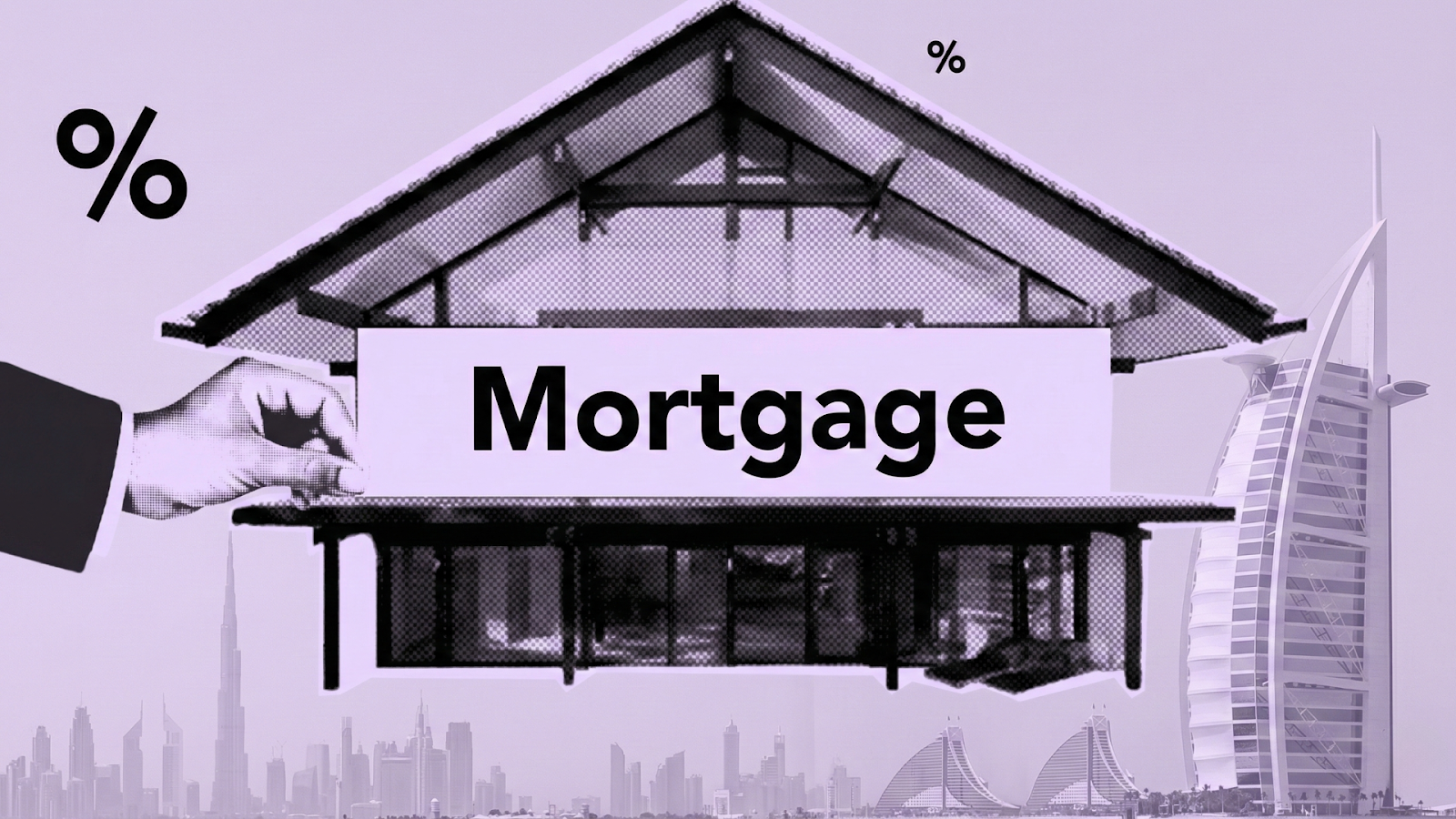
- Stress-test the mortgage. Model +200 bps on rates, one month of vacancy, and a 10% service-charge jump. The deal should still cash-flow.
- Prefer fixed (when available). Predictable payments beat small, uncertain savings.
- Mind the true cost stack. Add DLD transfer, trustee/admin, broker, PDC/processing, service charges, insurance, HOA extras, routine capex (AC coils, appliances). Build them into your net-yield model from day one.
7) Optimize the lease mix (and channel mix)

- Long-term = stability. 12-month leases cut churn and cleaning costs. Aim for renewals with fair increments rather than frequent re-lets.
- Short-stay = yield potential. Only where rules and location support it (hotel-style zones). Use professional operators and dynamic pricing; keep a 10–15% vacancy buffer in your model.
- Corporate lets. Target HR teams near major business districts; offer multiple units in one building for simplicity. Corporate tenancies renew more often and pay on time.
8) Lower friction, lower vacancy

- Frictionless viewings. Agent access lockers, video tours, and calendared slots shorten “days empty.”
- Move-in ready. Clean, painted, working bulbs, labeled breakers, fresh AC filters. Tenants decide within minutes—don’t lose them on basics.
- Clear house rules. Pet policy, minor wear/tear, balcony use—all documented. Clear rules reduce disputes and early exits.
9) Manage service charges like a hawk

- Know your line items. Security, cleaning, lifeguards, chillers, sinking funds—understand each.
- Attend AGMs (or have your manager do it). Push for preventive maintenance over reactive fixes—cheaper and better for NOI.
- Compare similar towers. If your building’s AED/sq ft is out of line, ask for justification and quotes; lobby for efficiencies.
10) Keep an “always-be-leasing” brand

- Great photos sell twice. Once at listing, then again at renewal. Re-shoot after upgrades; use daylight; lead with living room and view.
- Headline like a pro. “Quiet 1BR | 3-min to Metro | Bills Cap Option | New AC” beats “Nice 1BR.”
- Respond in minutes, not hours. Most leads choose the first agent who replies. Set auto-replies with viewing links.
11) Build buffers and rules

- Vacancy reserve. Keep 1–2 months’ rent per unit on hand.
- Capex reserve. 0.5–1.0% of property value annually for big-ticket items.
- Rent-to-income rule. Target tenants with 30–35% rent-to-income; lowers default risk.
- Lease calendar. Stagger renewals away from low-season months.
12) Portfolio-level moves that lift total income

- Rebalance by season. If downtown vacancies rise, rotate marketing to corporate lets; if coastal tourism peaks, trial short-stay in one test unit.
- Stack scale advantages. Same appliances across units for cheaper bulk maintenance; same linen SKUs for short-stay turnover.
- Cross-platform diversification. Mix direct ownership with fractional positions to gain exposure to high-demand micro-markets at low minimums (e.g., AED 500) while spreading risk.
A quick, practical checklist
- Yield model built on net numbers (incl. service charges + capex).
- Rent review every quarter; adjust based on data, not gut.
- SLA with manager (response, repair, renewal).
- Tenant retention plan (renewal perks, upgrade list).
- Photo + listing refresh before each relist.
- Vacancy + capex reserves in place.
- Diversified portfolio across 2–3 areas and unit sizes.
- Platform dashboards reviewed monthly to benchmark performance.
Why this works (and how to keep improving)
These steps boost effective rent (what hits your bank after costs) and cut avoidable leakage (vacancy days, churn, surprise maintenance). They also keep you ahead of the market cycle: when growth cools, your unit still renews; when demand spikes, your pricing captures it. Keep watching high-level signals (rental growth trends, transaction volumes, supply pipelines) to decide when to push price vs. protect occupancy.
FAQ Section
Q1: What are the legal requirements for foreigners to invest in Dubai real estate?
Foreigners can legally own freehold property in designated areas of Dubai. The process involves registering the property with the Dubai Land Department (DLD) and adhering to specific regulations. It's advisable to consult with a local real estate lawyer to ensure compliance with all legal requirements and to understand the nuances of property ownership for non-residents.
Q2: Are there any taxes on passive income from Dubai real estate?
One of Dubai's most attractive features for investors is its tax-friendly environment. Currently, there are no personal income taxes, capital gains taxes, or property taxes on residential real estate in Dubai. This significantly enhances the net returns for investors, making it a highly appealing destination for passive income generation.
Q3: What is the typical rental yield for properties in Dubai?
Rental yields in Dubai vary depending on the property type, location, and market conditions. Generally, apartments in prime areas can offer rental yields of 5-7%, while villas might yield 4-6%. Short-term vacation rentals often generate higher yields, sometimes exceeding 10-15%, but they also require more active management or the use of a property management service.
Q4: How can I find reliable property management services in Dubai?
Finding reliable property management services is crucial for truly passive income. You can research reputable companies online, check their reviews, and ask for references. Many real estate agencies also offer property management as part of their services. It's important to choose a company with a strong track record, transparent fees, and expertise in managing properties in your chosen area.
Q5: Is it better to invest in off-plan or ready properties for passive income?
Both off-plan and ready properties have their advantages. Off-plan properties, purchased before completion, often offer lower entry prices and higher potential for capital appreciation upon completion. However, they come with construction risks and delayed rental income. Ready properties provide immediate rental income and allow for immediate occupancy, but their appreciation potential might be lower. The choice depends on your investment horizon and risk tolerance.
Q6: What are the risks associated with investing in Dubai real estate?
While Dubai offers significant opportunities, risks include market fluctuations, potential oversupply in certain segments, and changes in government regulations. Economic downturns can impact property values and rental demand. It's essential to conduct thorough due diligence, diversify your investments, and stay informed about market trends to mitigate these risks.
Q7: How does fractional ownership work in practice for passive income?
Fractional ownership platforms allow you to buy a share of a property, typically with other investors. The platform manages the property, including rentals and maintenance. You receive a portion of the rental income and any appreciation in the property's value, proportionate to your share. This method offers a lower entry point and diversification benefits, making high-value properties accessible to more investors.
Deed's Take: Navigating Passive Income in Dubai
Dubai's real estate market is full of chances to earn passive income Dubai real estate. It offers good growth and rules that help investors. For those who want steady income, it's important to make smart choices, understand each investment method, and improve returns. Dubai's focus on new ideas and its strong rules, especially from groups like the DFSA and DLD, make it a safe place to invest in property.
Whether you choose traditional rentals, new fractional ownership, or diversified REITs, you can build significant passive income investment Dubai. To succeed, you need to do good research, understand the market, and be ready to change your plans to use new opportunities.
How Deed Can Help
If you are looking for an easy, safe, and clear way to earn passive income Dubai real estate, Deed is a great choice. Deed is regulated by the DFSA and licensed in the DIFC. It specializes in fractional ownership, letting you invest in top Dubai properties with a small start, from just AED 500 ($136).
Deed solves many problems that come with traditional property investing:
- Low Start-Up Cost: You can invest in valuable properties without needing a lot of money upfront. This makes it easier to invest in different properties.
- Expert Management: All properties with Deed are managed by professionals. This means you don't have to worry about finding tenants, repairs, or collecting rent. You can just enjoy your rental income without the daily work.
- Regulated and Safe: Because Deed is regulated by the DFSA and licensed in the DIFC, investors can trust it. Your ownership is legally set up through Special Purpose Vehicles (SPVs), which means your investment is clear and protected.
- Steady Income: Deed focuses on properties that earn income. You get a share of the monthly rent, which helps you reach your passive income investment Dubai goals.
- Clear Ways to Exit: Deed offers ways to sell your shares twice a year. This gives you some freedom if your investment plans change.
By using Deed, investors who want steady income can build a varied portfolio of Dubai real estate. You can earn consistent passive income Dubai real estate easily and safely. Look into the opportunities and start building your financial future today.
Conclusion
Generating passive income from Dubai real estate offers a compelling pathway to financial freedom and wealth accumulation. With its dynamic market, tax advantages, and diverse investment opportunities—from traditional rental properties and fractional ownership to REITs and commercial ventures—Dubai stands out as a prime destination for investors worldwide. By understanding the seven proven methods outlined in this guide and conducting thorough due diligence, you can strategically position yourself to benefit from this thriving market. Whether you are a seasoned investor or just starting, Dubai provides a robust and rewarding environment for real estate investment. Take the first step towards securing your financial future; explore the opportunities in Dubai real estate today and unlock your passive income potential.
__________________________________________________
For promotional purposes only. Property and other details may vary. Capital at risk. Deed is regulated by the DFSA.
Senior Growth, Marketing & Brand Manager | Elevating Brand Equity & Fueling Sales Growth Across Fintech, Proptech.
Signup to our newsletter!
Stay ahead with exclusive updates, insights, and opportunities delivered straight to your inbox.
Frequently Asked Questions

Start earning passive income today
Join thousands of investors building wealth through fully-managed rental properties.